




What Happens If You Overdo LED Light Therapy?
Summary
Overusing red light therapy masks is a big talking point right now. Although adverse reactions to light therapy are rare, in some cases, it may lead to skin irritation, redness and sensitivity. Here’s everything you need to know about how often you should use red light therapy.
Too much of a good thing applies to many facets of life, and one of those is red light therapy devices. As much as we wish there were shortcuts, too, overdoing red light therapy isn’t going to give you results quicker. In fact, photobiomodulation appears to have a biphasic dose response, meaning that more light does not necessarily produce a greater benefit and excessive doses may actually reduce the desired biological response (Huang et al., 2009).
What is Red Light Therapy?

Red light therapy, or photobiomodulation, is a non-invasive treatment modality that uses red light at specific wavelengths for therapeutic skin and body rejuvenation.
This light, used in a range of 600-700 nm, can influence cellular activity through a number of mechanisms. Red and near-infrared light are thought to interact with cellular photoacceptors, including cytochrome c oxidase within mitochondria, influencing ATP production, reactive oxygen species, nitric oxide and downstream cell signalling. These effects may influence fibroblast activity, collagen remodelling and inflammatory pathways.
Red light therapy is used in a multitude of ways, but in the beauty industry, it’s used in masks and panels to improve skin health and overall wellbeing.
(Hamblin, 2018)
What is an LED Light Therapy Mask?
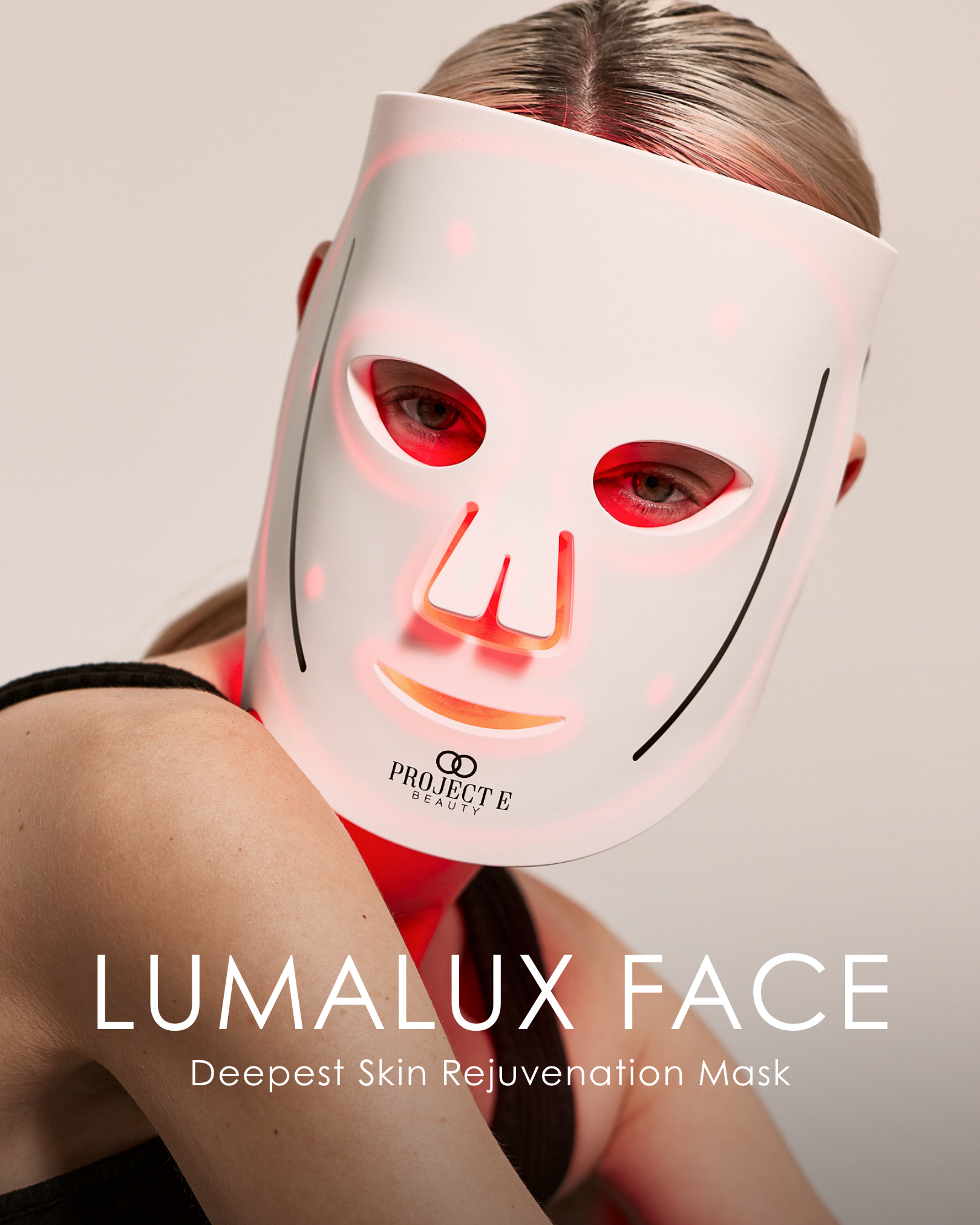
The most popular way to get the benefits of red light therapy is through the use of LED therapy masks. These can be made of plastic or silicone, fitted with LED bulbs that emit various wavelengths in many colors to treat skin concerns. They’re pretty distinct with that futuristic look, especially when turned on, emitting red light.
Masks attach to the face using a strap and some wearable, high-quality devices have inbuilt goggles to protect the eyes. The bulbs emit red, blue, and infrared light. Some masks have up to 5 LED colors including yellow, green, cyan, purple, and white, although the evidence supporting the different wavelengths varies considerably, and simply including more colours does not necessarily mean a device will deliver greater clinical benefit. But the focus of this article is on red and infrared light therapy.
What are the Benefits of LED Light Therapy?
There are many benefits of LED therapy when used regularly, each of which differs depending on the device used, medical history and concerns presented.
Red light therapy benefits include:
- Collagen synthesis
- Smooths fine lines
- May improve skin elasticity
- Improved skin health
- Reduced redness
- May improve pigmentation and uneven skin tone depending on the wavelength, dose and condition being treated (Lee et al., 2007)
Infrared light therapy benefits include:
- Improved circulation
- Reduced inflammation
- Pain relief
- Accelerated wound healing
- Muscle recovery
- Influences mitochondrial activity and cellular signalling
- Enhances skin health
These benefits comes from different forms and applications of photobiomodulation,
Is Red Light Therapy Safe?
Yes, LED light therapy is a safe, effective and non-invasive treatment option posing very little risk of skin damage. A number of LED devices are FDA-cleared for specific indications and several studies have attested to its effectiveness in skin rejuvenation and improving visible signs of aging, such as fine lines and elasticity (Maghfour et al., 2025).
Although it's safe for the majority, it is important to note that red light therapy is not suitable for everyone. Those with increased photosensitivity (such as lupus), those taking medication that can increase light sensitivity should all seek medical advice before using. People undergoing active cancer treatment should discuss photobiomodulation with their treating medical team, particularly if treatment is being considered directly over a tumour or treatment site.
Safety data specifically for cosmetic LED masks during pregnancy and breastfeeding are limited, so it is sensible to follow the manufacturer's guidance and seek medical advice if there is any uncertainty.
How Often Can You Use Light Therapy at Home?

The benefits of light therapy generally develop over a course of repeated treatments rather than after a single session, which is why consistency of treatment is very important. This is one of the many reasons for the rise in popularity of at-home devices, as multiple professional light therapy sessions per week is not feasible for most.
Most LED devices can be used 3–5 times a week, though session length varies quite a bit depending on the device. However, there is no universal frequency that applies to every LED device. Treatment depends on factors including wavelength, irradiance, fluence and treatment duration, so users should follow the protocol recommended for their specific device.
Lower-intensity masks often require 10–20 minutes per session, while higher-intensity devices may only need a few minutes. It's worth checking your device's manual, as the recommended treatment time is set according to its specific power output.
Shorter session times tend to make the habit easier to stick to, since a quick treatment slots into a daily routine far more comfortably than one that eats up 20 minutes. Whatever device you use, the key is consistency over time rather than long or frequent sessions.
What Happens if I Overuse My LED Device?
Some emerging data suggest that overuse of LED light therapy masks may not necessarily improve results and, biologically, excessive exposure could potentially reduce the desired photobiomodulatory response. However, we do not yet have strong clinical evidence showing exactly what constitutes “overuse” across different consumer LED masks.
One way red and infrared light therapy impacts the skin is by creating transient changes in cellular redox signalling. Red and infrared light can produce a transient increase in reactive oxygen species, or ROS. At appropriate levels, ROS are not simply damaging molecules; they also act as cellular signalling molecules and can activate downstream pathways involved in cell survival, repair and inflammation.
However, there is emerging thought that if the dose of light is excessive, these ROS may have the opposite effect.
Photobiomodulation appears to follow a biphasic dose response: too little light may produce little effect, an appropriate dose can stimulate a beneficial biological response, while excessive doses may become less effective or potentially inhibitory. ROS signalling is one proposed mechanism involved in this response.
This is particularly important when using LED light therapy for skin rejuvenation and anti-aging, where the dose required is lower than in medical treatments, for example.
Importantly, much of our understanding of excessive dosing and ROS comes from laboratory and experimental photobiomodulation research. There is currently limited clinical evidence demonstrating harmful oxidative stress from appropriately used at-home LED masks.
The bottom line is that overusing LED sessions at home isn’t going to necessarily produce a greater biological response or better results. The goal with light therapy is a balance between stimulating skin cells without causing unnecessary stress. You won’t get better results by doing more or longer sessions than recommended.
(Huang et al., 2009; Hamblin, 2018)
Signs You’ve Overused an LED Face Mask?
If you’re worried you’ve overused your LED mask, here are some signs to look out for:
Increased sensitivity
This can include things like irritation, itchiness, redness and a tight feeling. This is different to a post-treatment flush; it presents as persistent and out of the norm for your skin.
Changes in hyperpigmentation or dark spots
If you notice dark spots or melasma getting darker or your skin tone looking more uneven, take a short break from treatment. This doesn't mean you have to give up on light therapy entirely. Pause to check your device settings, treatment time, and whether the mask is emitting heat. Specific red and near-infrared wavelengths can actually help improve pigmentation when used correctly, though more high-quality clinical studies are still needed to fully understand optimal treatment parameters (Galache et al., 2024). While adjusting your routine and dose often helps, persistent or significant changes should be evaluated by a medical professional or dermatologist.
You have eye irritation
If your eyes feel irritated, stop using the device and check that you are following the manufacturer's eye-safety instructions and using any recommended eye protection. The LumaLux has protective eye cushions to ensure maximum safety from any eye irritation. It’s rare in a mask that’s compliant, but if you’re experiencing sensitivity, stop using the mask and seek medical advice.
Stop using your LED mask to give your skin time to settle and use hydrating ingredients like the Project E Beauty Hyaluronic Acid Activating Serum and skin barrier-repairing creams.
The Takeaway: Can You Overdo LED Light Therapy?
Technically, there is a possibility you can. However, we don't currently have enough clinical evidence to define exactly what constitutes harmful “overuse” across the wide range of at-home devices available. What we do know is that photobiomodulation has a therapeutic window and more exposure does not necessarily mean better results.
The main takeaway is that you cannot try to squeeze a week's worth of LED sessions into a single treatment session and consistency is more important than excess. As mentioned, benefits generally develop through consistent treatment over time and results are seen with consistent treatment sessions over several weeks and months.
There is no added benefit to wearing your LED light therapy mask for longer than is advised, because photobiomodulation follows a dose-dependent response and exceeding the optimal treatment dose does not necessarily increase the biological benefit.
Even where the risk of damage is low, a longer treatment does not equal better results, so always adhere to the treatment time recommended for your device. Slow and steady wins the race when it comes to LED therapy face masks.
References
Huang YY, Chen ACH, Carroll JD, Hamblin MR. Biphasic dose response in low level light therapy. Dose Response. 2009;7(4):358–383. PMID: 20011653.
Hamblin MR. Mechanisms and mitochondrial redox signaling in photobiomodulation. Photochem Photobiol. 2018;94(2):199–212. PMID: 29164625.
Lee SY, Park KH, Choi JW, et al. A prospective, randomized, placebo-controlled, double-blinded, and split-face clinical study on LED phototherapy for skin rejuvenation. J Photochem Photobiol B. 2007;88(1):51–67. PMID: 17566756.
Maghfour J, et al. Evidence-based consensus on the clinical application of photobiomodulation. J Am Acad Dermatol. 2025;93(2):429–443. PMID: 40253006.
Galache TR, et al. Photobiomodulation for melasma treatment: integrative review and state of the art. Photodermatol Photoimmunol Photomed. 2024;40(1). PMID: 38018017.
Related article: Are There Any Dangers of LED Face Masks?




Leave a comment
This site is protected by hCaptcha and the hCaptcha Privacy Policy and Terms of Service apply.